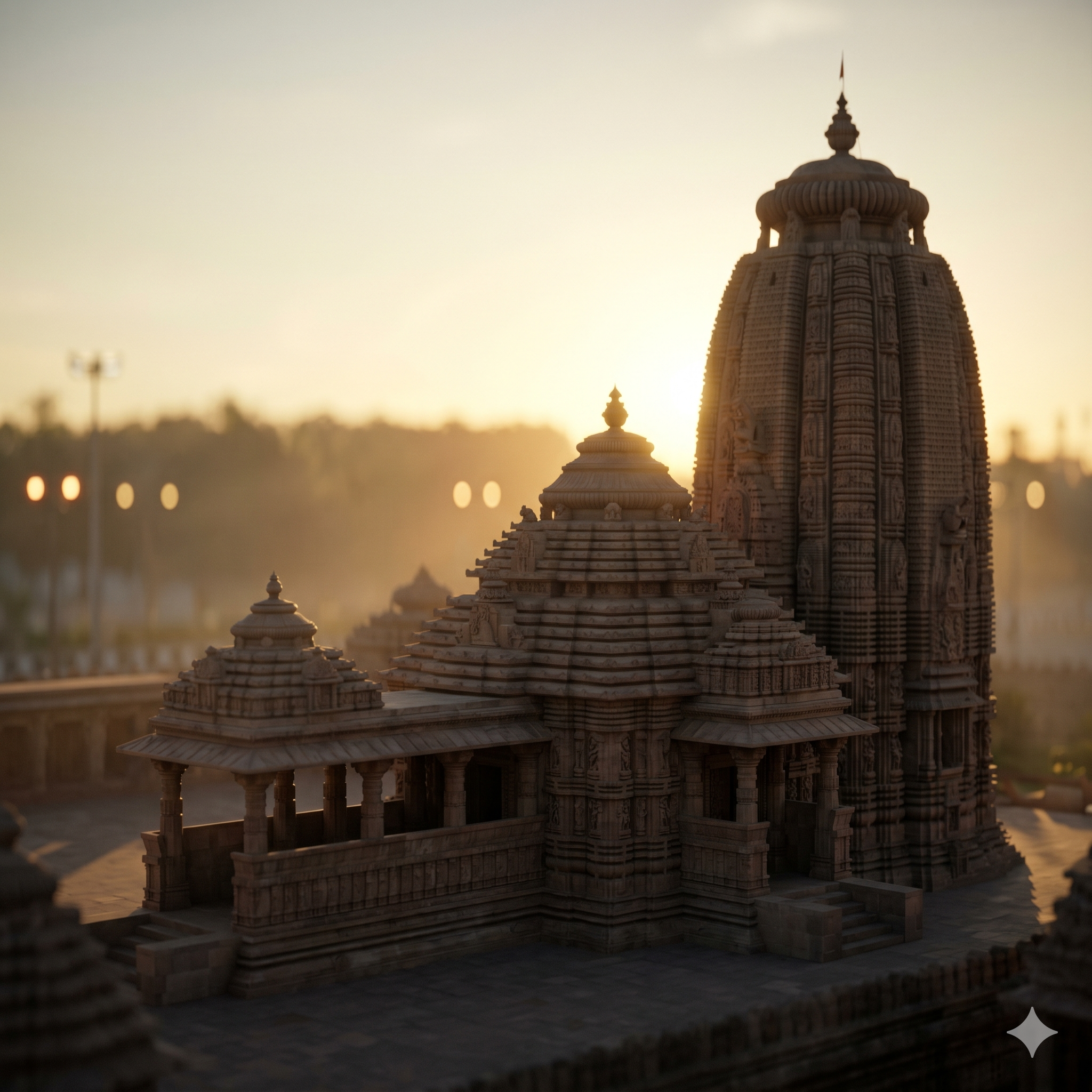
About this Style
The Nagara style is a classical North Indian temple architecture (originating c. 5th century CE) defined by a square plan, raised platforms, and a curvilinear tower called a shikhara. Key features include a garbhagriha (sanctum), mandapas (halls), and an amalaka (ribbed disc) atop the shikhara, usually lacking elaborate boundary walls. [1, 2, 3, 4]
Key Features of Nagara Architecture
- Shikhara: The most distinct feature, a tall, curvilinear tower sloping inwards to a point, representing a mountain.
- Garbhagriha: The innermost sanctum where the main deity is placed, located directly beneath the highest shikhara.
- Mandapa: Pillared hall(s) used for assembly, located before the sanctum.
- Platform & Layout: Temples are typically built on raised stone platforms, often in a panchayatana style (a main shrine surrounded by four smaller shrines).
- Decoration: Richly decorated with intricate sculptures of deities and daily life.
- Distinctive Top: Crowned by a ribbed disc called the amalaka and a finial called the kalasha. [1, 2, 3, 4, 5]
Sub-schools/Styles
Nagara architecture has three main sub-types based on region: [1, 2, 3, 4]
- Odisha School: Known for high towers and distinct, conical shikharas (e.g., Konark Sun Temple, Lingaraja Temple).
- Central Indian School: Known for complex designs with multiple subsidiary towers (e.g., Khajuraho temples).
- Western Indian/Solanki School: Famous for the Māru-Gurjara style, often featuring intricate carvings and a Surya Kund (stepped water tank). [1, 2, 3, 4, 5]
Prominent Examples
- Kandariya Mahadev Temple (Khajuraho, Madhya Pradesh): A peak example of the Central Indian style.
- Lingaraja Temple (Bhubaneswar, Odisha): Represents the Odisha sub-style.
- Modhera Sun Temple (Gujarat): A key example of the Solanki school.
- Dashavatara Temple (Deogarh, Uttar Pradesh): An early example of a Gupta-period Nagara temple. [1, 2, 3, 4, 5]