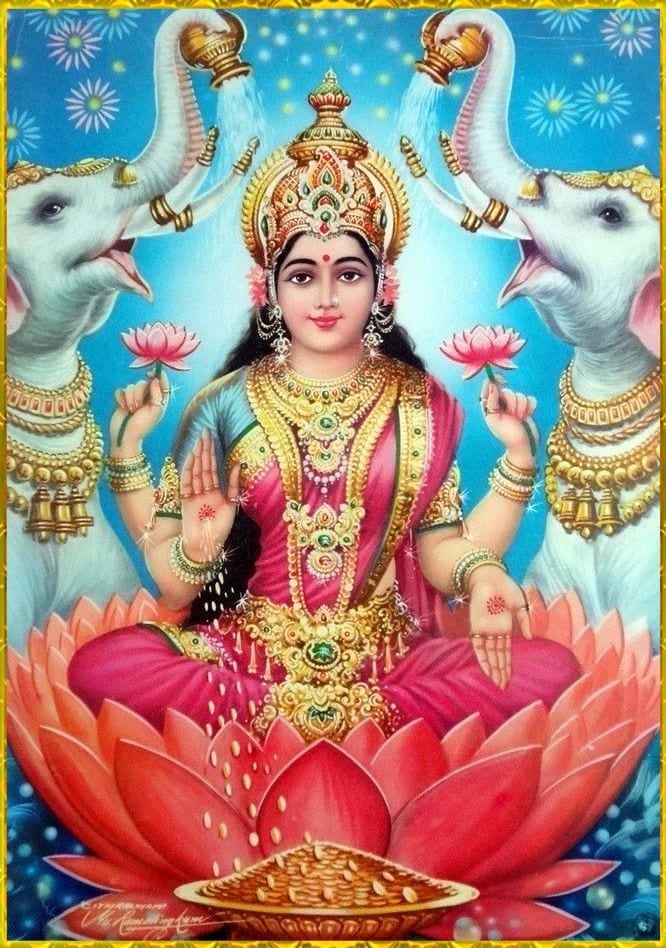
Lakshmi Devi, the goddess of wealth, prosperity, and fortune, holds a significant place in Hindu mythology and is revered as the consort of Lord Vishnu. She embodies the principles of abundance and harmony, making her a vital figure in both spiritual and material realms. Depicted as a beautiful woman adorned with luxurious garments and gold jewelry, Lakshmi is often shown seated or standing on a lotus flower, symbolizing purity and enlightenment. Her four hands represent the four goals of human life: Dharma (righteousness), Artha (prosperity), Kama (desire), and Moksha (liberation).
In Hindu texts, Lakshmi is celebrated for her role in the Samudra Manthan, the churning of the ocean, where she emerged from the depths as a divine being, bringing forth wealth and prosperity. This event not only highlights her significance but also her connection with other deities and celestial beings. Lakshmi's relationship with Vishnu is particularly noteworthy, as she is often depicted alongside him in various avatars, emphasizing the importance of balance between spiritual wealth and material success.
Culturally, Lakshmi is worshipped during festivals such as Diwali, where devotees seek her blessings for prosperity and well-being in their homes and businesses. Her presence is integral to many rituals and ceremonies, reflecting her status as a nurturing force in the lives of individuals and communities alike. The reverence for Lakshmi transcends religious boundaries, symbolizing universal values of abundance, love, and harmony.