Heritage · Faith · Tradition
About the Temple
Introduction
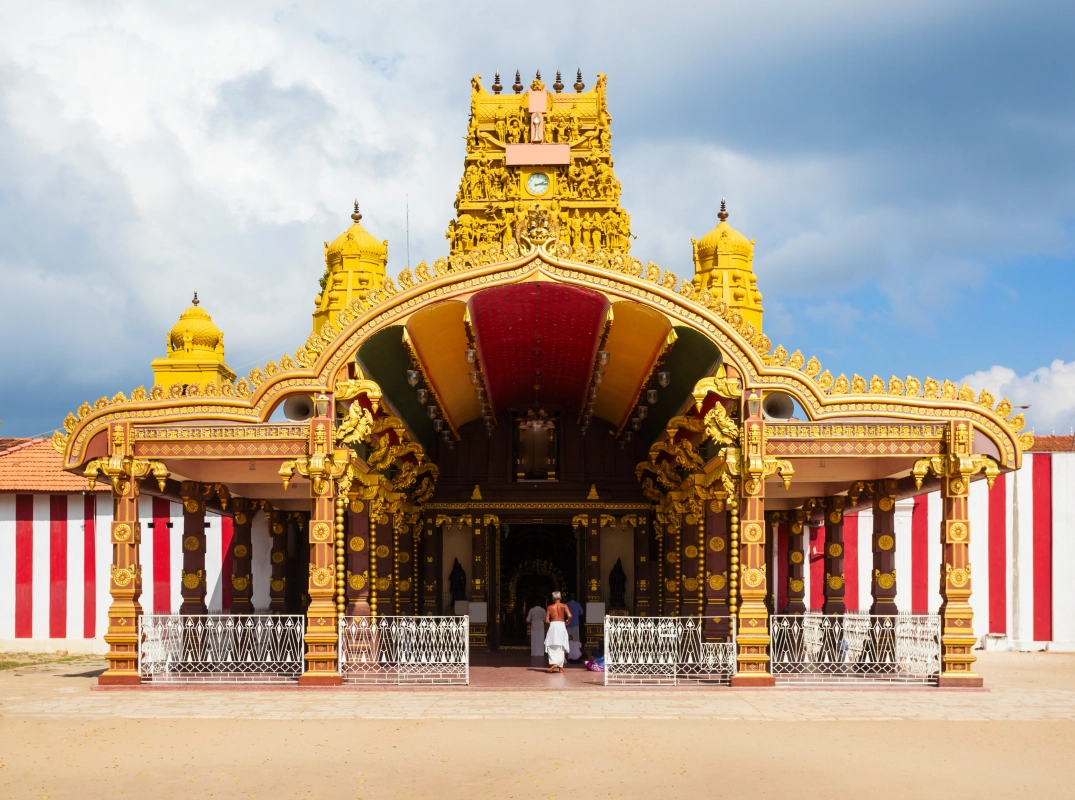
Arulmigu Subramaniya Swamy Temple at Tiruchendur, in Thoothukudi district, Tamil Nadu, is one of the Arupadai Veedu – the six sacred abodes of Lord Murugan – and is counted as the second of them. It is unique among the six as the only one that stands right on the seashore, beside the Bay of Bengal, while the others are on hills. The Lord here is lovingly called Senthilandavar, and the temple draws pilgrims from all over Tamil Nadu and beyond. It is administered by the Tamil Nadu Hindu Religious and Charitable Endowments Department.
Main Deity
The presiding deity is Lord Subramaniya Swamy (Murugan), worshipped as Senthilandavar. According to tradition, this is the place where the Lord camped with his army before his great battle against the demon Surapadman, and where, after his victory, he worshipped Lord Shiva. The temple also has shrines of the Lord's consorts, Valli and Deivanai, and of other deities within its corridors.
Sthala Puranam (Legend)
The demon Surapadman had gained great powers and was tormenting the gods. Lord Shiva created Murugan to destroy him. Murugan led the divine army south and set up camp at Tiruchendur. In the great battle, Surapadman took many forms, and at last became a mighty mango tree in the sea. Murugan split the tree in two with his Vel (divine spear); one half became a peacock, which became his vehicle, and the other a rooster, which became the emblem on his flag. Having defeated the demon, the Lord blessed the place, and Tiruchendur became a sacred abode of victory.
Kanda Sashti and Soorasamharam
The biggest festival at Tiruchendur is Kanda Sashti, celebrated over six days in the Tamil month of Aippasi (around October–November). Devotees fast during the festival, and on the sixth day the Soorasamharam – the Lord's victory over Surapadman – is enacted on the beach in front of the temple, watched by lakhs of devotees. The next day, the divine wedding (Thirukalyanam) of the Lord with Deivanai is celebrated.
Other Festivals
- Masi and Avani festivals: the temple's grand annual festivals (Brahmotsavams), with processions and the chariot festival.
- Vaikasi Visakam (May–June): the birthday of Lord Murugan.
- Thai Poosam (January–February): special worship and large crowds of devotees.
Sacred Waters and Sights
- Sea bath: pilgrims bathe in the sea in front of the temple before darshan.
- Nazhi Kinaru: a small, sacred freshwater well close to the shore, whose sweet water near the salty sea is regarded as a wonder; pilgrims bathe here after the sea bath.
- Valli Guhai: a cave near the temple associated with Goddess Valli.
- Rajagopuram: the temple's tall tower is a landmark visible from far along the coast.
Temple Timings
- The temple opens very early in the morning and stays open until night, with poojas at set times.
- Arrangements change during Kanda Sashti and other festivals. Please check the official temple website before your visit.
How to Reach
By Train: Tiruchendur railway station is close to the temple, with trains via Tirunelveli and from Chennai.
By Road: Tiruchendur is about 40 km from Thoothukudi and about 60 km from Tirunelveli. TNSTC buses run frequently from Thoothukudi, Tirunelveli, Madurai and other towns.
By Air: the nearest airport is Thoothukudi Airport (TCR), about 40 km away. Madurai Airport has more flights.
Visitor Information
- Dress code: traditional, modest dress is recommended – dhoti for men, and saree or churidar for women.
- Sea safety: bathe only in the designated areas and follow the instructions of lifeguards and police, especially on crowded days.
- Crowds: Kanda Sashti, Tamil New Year, weekends and holidays are very busy.
- Nearby places: Valli Guhai, Nazhi Kinaru, and other Murugan / Subrahmanya temples on this site – the Arulmigu Dhandayuthapani Swamy Temple, Palani (another of the six abodes), the Sri Subrahmanyeswara Swamy Temple, Mopidevi and the Nallur Kandaswamy Kovil, Jaffna.