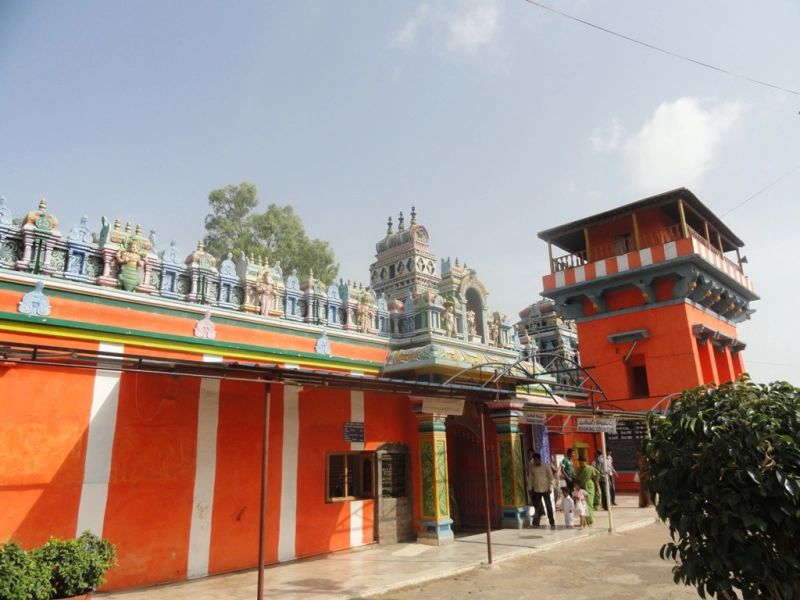
Hanuman Jayanti celebrates the appearance of Sri Anjaneya Swamy, the mighty devotee of Lord Rama. In Andhra Pradesh and Telangana it is kept on Vaishakha Bahula Dashami, when Hanuman Deeksha devotees complete their vow at temples such as Kondagattu and Karmanghat; much of India celebrates it on Chaitra Purnima.
Festival Dates
Introduction
Hanuman Jayanti – also called Hanumath Jayanthi or Anjaneya Swamy Jayanthi – celebrates the appearance of Sri Hanuman, the son of Anjana Devi and the great devotee of Lord Rama. In Andhra Pradesh and Telangana it is commonly observed on Vaishakha Bahula Dashami (the tenth day of the waning moon in Vaishakha, usually in May or early June). This day also marks the completion of the Hanuman Deeksha, a period of disciplined devotion that begins on Chaitra Purnima.
In much of North India and many other regions, Hanuman Jayanti is celebrated on Chaitra Purnima itself; Telugu devotees often honour that day too, and at Kondagattu it is known as Chinna Hanuman Jayanti, with the Vaishakha festival as Pedda Hanuman Jayanti. Some traditions regard the Chaitra Purnima day as a celebration of Hanuman's victories (Hanuman Vijayotsavam). In Tamil Nadu, Hanumath Jayanthi falls in the month of Margazhi, and in Karnataka many observe Hanuman Vratam in Margashira.
Significance and Legend
According to tradition, Hanuman was born to Anjana Devi and Kesari through the blessing of Vayu, the wind god, and is revered as an embodiment of strength, courage, wisdom and humility. His selfless service to Lord Rama – crossing the ocean to find Sita Devi, bringing the Sanjeevani herb to save Lakshmana, and standing beside Rama through every trial – is told with deep love in the Ramayana, especially in the Sundara Kanda. Devotees pray to Hanuman for courage, health and protection from fear and obstacles, and as the ideal of devotion he is never worshipped apart from Lord Rama – see Sri Rama Navami.
How it is Celebrated in Andhra Pradesh and Telangana
- Hanuman Deeksha: on Chaitra Purnima many devotees take up the deeksha, wearing a mala with the image of Hanuman and saffron clothes. Over the deeksha period – commonly 41 days – they live simply: bathing early, eating a single satvik meal, walking barefoot, sleeping on the floor and keeping away from all intoxicants.
- Completing the deeksha: on Hanuman Jayanti the maladharulu travel to Hanuman temples to complete their vow (deeksha viramana). The Kondagattu Anjaneya Swamy temple in Jagtial district draws vast numbers of deeksha devotees for its Pedda Hanuman Jayanti celebrations.
- Temple festivities: major Hanuman temples, such as Karmanghat in Hyderabad, are thronged with devotees from early morning for special abhishekam, alankaram and pujas.
- Recitation: homes and temples resound with the Hanuman Chalisa and readings of the Sundara Kanda.
Rituals and Puja
- An early bath, followed by worship of Sri Rama, Sita Devi and Hanuman together.
- Abhishekam and sindhooram (vermilion) for the Lord, and worship with tamalapaku (betel leaves) – the betel-leaf puja is a beloved form of Hanuman worship in the Telugu lands.
- Recitation of the Hanuman Chalisa, Sundara Kanda and the Lord's names; many devotees fast for the day.
Foods and Offerings
- Vada mala – a garland of vadas offered to the Lord.
- Tamalapaku (betel leaves) and sindhooram.
- Bananas and other fruits, and simple sweets shared as prasadam.
Temples Known for this Festival
- Sri Karmanghat Hanuman Devasthanam, Hyderabad – one of the most loved Hanuman shrines of Telangana, crowded with devotees on Hanuman Jayanti for special pujas.
- Sri Anjaneya Swamy Temple, Kondagattu, Jagtial district – the best-known place for the completion of the Hanuman Deeksha, celebrating both the Chinna and the Pedda Hanuman Jayanti.
The Hanuman Jayanti dates are shown in the festival dates above. In Andhra Pradesh and Telangana it falls on Vaishakha Bahula Dashami, and the Chaitra Purnima observance on the full moon of Chaitra, as per the Telugu panchang.
Temples Celebrating Hanuman Jayanti (Hanumath Jayanthi)