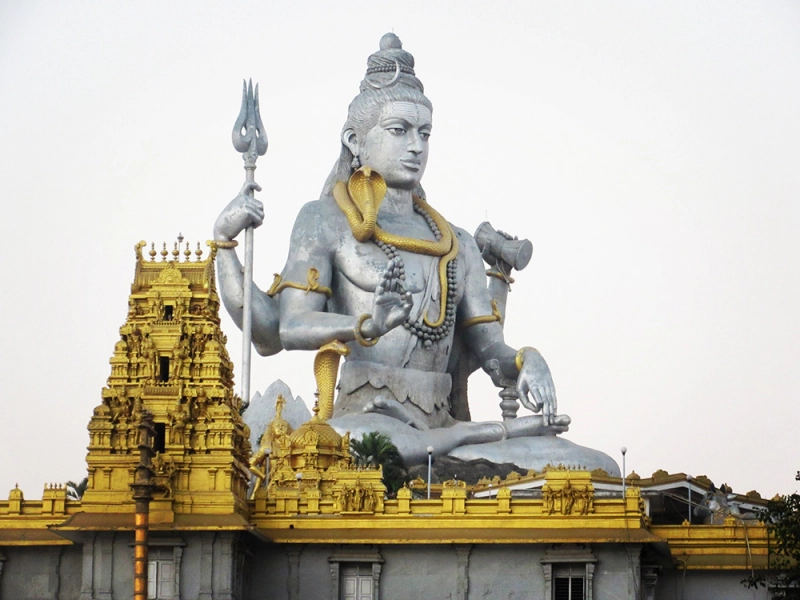
Lord Shiva, one of the principal deities of Hinduism, embodies the complex interplay of creation, preservation, and destruction. Revered as 'Mahadeva' or 'The Great God,' Shiva is often depicted in a meditative state, symbolizing his role as the ultimate ascetic. His significance in Hindu mythology extends beyond mere worship; he represents the cyclical nature of life and the universe. With his third eye, which signifies wisdom and insight, he has the power to see beyond the physical realm, and his trident (trishula) symbolizes the three aspects of existence: creation, protection, and destruction.
Shiva's relationships with other deities enrich his narrative. He is the consort of Parvati Devi, with whom he has two sons, Ganesha and Kartikeya, thus portraying the ideal family dynamic within Hindu mythology. His dance, known as 'Tandava,' is a cosmic dance that signifies the rhythm of the universe and the cycle of creation and destruction. Notably, the stories of his interactions with other gods and demons, such as the churning of the ocean (Samudra Manthan), highlight his role as a protector and a formidable force against evil.
Shiva's cultural importance transcends religious boundaries, making him a symbol of meditation, yoga, and artistic expression. Temples dedicated to Lord Shiva, like the famous Kashi Vishwanath Temple, draw devotees from all walks of life. His worship is accompanied by various festivals, the most prominent being Maha Shivaratri, which celebrates the union of Shiva and Shakti. Through rituals and prayers, followers seek his blessings for inner strength, peace, and prosperity, further solidifying his place at the heart of Hindu devotion.