Lord Shiva: Mahadeva, the Great God of Transformation
Lord Shiva, revered as Mahadeva, Maheshwara, Shankara, Rudra, Pashupati, Nataraja and Bholenath, is one of the most profound and beloved deities in Hindu tradition. He is worshipped as the supreme yogi, the destroyer of ignorance, the compassionate lord of devotees, the cosmic dancer and the transforming power behind creation. In Shaivism, Shiva is not merely one deity among many; he is the Supreme Reality, the consciousness from which the universe arises and into which it dissolves.
Shiva is often called the destroyer in the Trimurti, along with Brahma the creator and Vishnu the preserver. But destruction in Shiva's context is not only an ending. It is purification, renewal and liberation. He dissolves ego, ignorance, attachment and worn-out forms so that higher truth can emerge. This is why Shiva is both fearsome and benevolent, austere and tender, beyond the world yet deeply present in the lives of devotees.
Meaning of the Name Shiva
The Sanskrit word Shiva means auspicious, gracious or benevolent. This meaning is important because Shiva's outer imagery can appear intense: ashes, serpents, cremation grounds, the third eye and the trident. Yet behind these symbols is the deeply auspicious power that frees beings from illusion. He is called Shankara, the giver of happiness; Mahadeva, the great god; Rudra, the fierce one; Pashupati, lord of all beings; and Neelakantha, the blue-throated lord who protects creation.
These names reveal the range of Shiva's nature. He is the silent yogi in meditation, the householder with Parvathi and his children, the lord of dance, the healer, the fierce protector and the compassionate refuge of those who call him with sincerity.
Shiva in the Cosmic Order
In Hindu philosophy, Shiva represents the power of transformation. Creation cannot remain static; everything must change, mature, dissolve and return. Shiva governs this sacred process. He removes what is false so that truth may shine. He is also deeply connected with time, death and liberation, because he reminds devotees that the body is temporary while the Self is eternal.
In Shaiva traditions, Shiva is understood as pure consciousness, and Shakti is his dynamic power. Without Shakti, Shiva is stillness; without Shiva, Shakti has no stable ground. Their unity is expressed in the form of Ardhanarishvara, half Shiva and half Parvathi, teaching that masculine and feminine, stillness and movement, wisdom and energy are inseparable.
Iconography and Sacred Symbols
Every feature of Shiva's form carries spiritual meaning. His appearance teaches fearlessness, detachment, compassion, self-control and inner awakening.
- Third eye: Represents spiritual insight that sees beyond illusion. When opened, it burns desire, ignorance and falsehood.
- Trishula: The trident symbolizes mastery over the three gunas, the three times and the forces of creation, preservation and dissolution.
- Damaru: The small drum represents cosmic rhythm, vibration and the sound from which creation unfolds.
- Crescent moon: Shows control over time and the mind, and the cool grace that balances Shiva's fiery power.
- Ganga in his hair: Shiva receives the descending Ganga and softens her force, symbolizing compassion that channels divine grace for the world.
- Serpent Vasuki: Represents awakened energy, fearlessness and mastery over death.
- Vibhuti or sacred ash: Reminds devotees that all worldly forms become ash, and only the eternal truth remains.
- Nandi: Shiva's bull vehicle symbolizes strength, patience, dharma and devoted service.
- Lingam: The Shiva Lingam represents the formless, infinite and all-pervading nature of Shiva.
Major Legends of Lord Shiva
Shiva appears in countless legends, each revealing a different aspect of his divinity. In the story of Samudra Manthan, the churning of the cosmic ocean released the deadly poison Halahala. To save the universe, Shiva drank the poison and held it in his throat, becoming Neelakantha. This legend shows his compassion and willingness to absorb suffering for the welfare of creation.
In the descent of the Ganga, Shiva receives the powerful river in his matted locks so that her force does not destroy the earth. As Tripurantaka, he destroys the three cities of the asuras, symbolizing the destruction of ego, karma and illusion. As Dakshinamurthy, he becomes the silent teacher who gives wisdom beyond words. As Bhairava, he protects sacred order with fierce clarity.
Nataraja: The Cosmic Dance
As Nataraja, Shiva is the lord of dance. His tandava is not merely artistic movement; it is the rhythm of the universe. The dance expresses creation, preservation, dissolution, concealment and grace. The ring of fire around Nataraja represents the cosmos, while the dwarf under his foot represents ignorance. His raised foot offers liberation, and his calm face teaches that divine awareness remains peaceful even amid cosmic movement.
Nataraja is one of the most powerful images of Hindu spirituality because it unites philosophy, devotion, art and science-like insight into cosmic rhythm. It tells devotees that change is not chaos when it is guided by divine consciousness.
Shiva and Parvathi: Consciousness and Shakti
Shiva's relationship with Parvathi Devi is central to his mythology. Parvathi awakens Shiva from detached meditation and brings him into family, compassion and creative participation. Their union represents the harmony of tapas and love, renunciation and household life, consciousness and energy. Together they are parents of Ganesha and Kartikeya, making Shiva both the supreme yogi and the loving father.
In the form of Ardhanarishvara, Shiva and Parvathi share one body, showing that reality is complete only when the masculine and feminine principles are understood as one. This form carries a deep message of balance, mutual respect and spiritual wholeness.
Worship, Mantras and Festivals
Shiva is worshipped in homes, temples, mountain shrines, riverbanks and sacred caves. The Shiva Lingam is bathed with water, milk, honey, curd and other offerings in abhishekam. Bilva leaves are especially dear to Shiva. Devotees chant Om Namah Shivaya, the Mahamrityunjaya Mantra, Shiva Panchakshari Stotram, Rudram and other hymns for peace, protection, health and liberation.
Maha Shivaratri is the most important festival dedicated to Shiva. Devotees observe fasting, night vigil, meditation, mantra chanting and temple worship. Mondays, Pradosham, the month of Shravan and pilgrimages to the twelve Jyotirlingas are also deeply associated with Shiva worship.
Cultural and Spiritual Significance
Lord Shiva speaks to people from every path of life. To yogis, he is Adiyogi, the first teacher of yoga and meditation. To householders, he is the compassionate father of a divine family. To artists, he is Nataraja, the lord of rhythm and expression. To seekers of liberation, he is the silent reality beyond ego and fear.
Shiva's spiritual message is simple and profound: let go of false identity, control the senses, transform poison into wisdom, remain compassionate, and discover the stillness within. He teaches that true strength is not domination but mastery over oneself. To worship Shiva is to invite inner clarity, courage, humility and liberation.
Connections
Related Temples
Explore temples →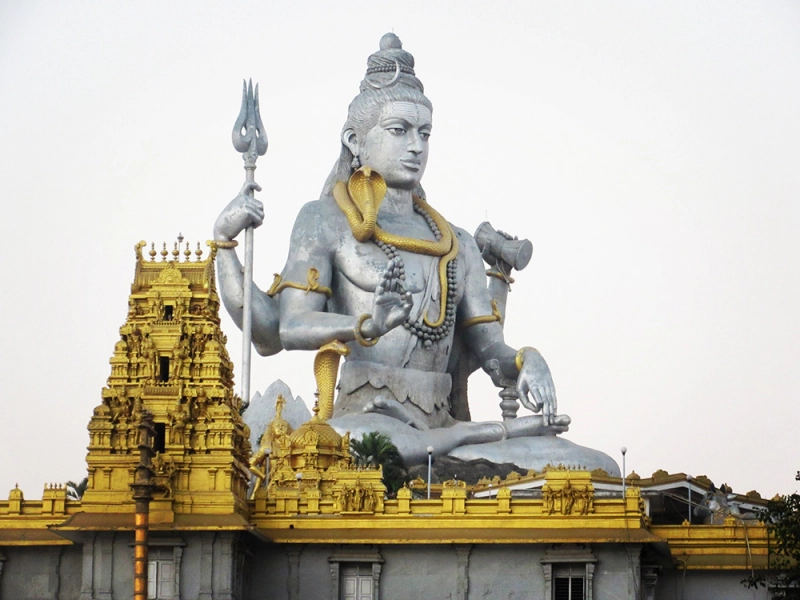
Related Mantras & Slokas
Browse mantras →Continue Exploring
Open related mythology, temple pages, mantras and the interactive connection web.