Kandariya Mahadev Temple
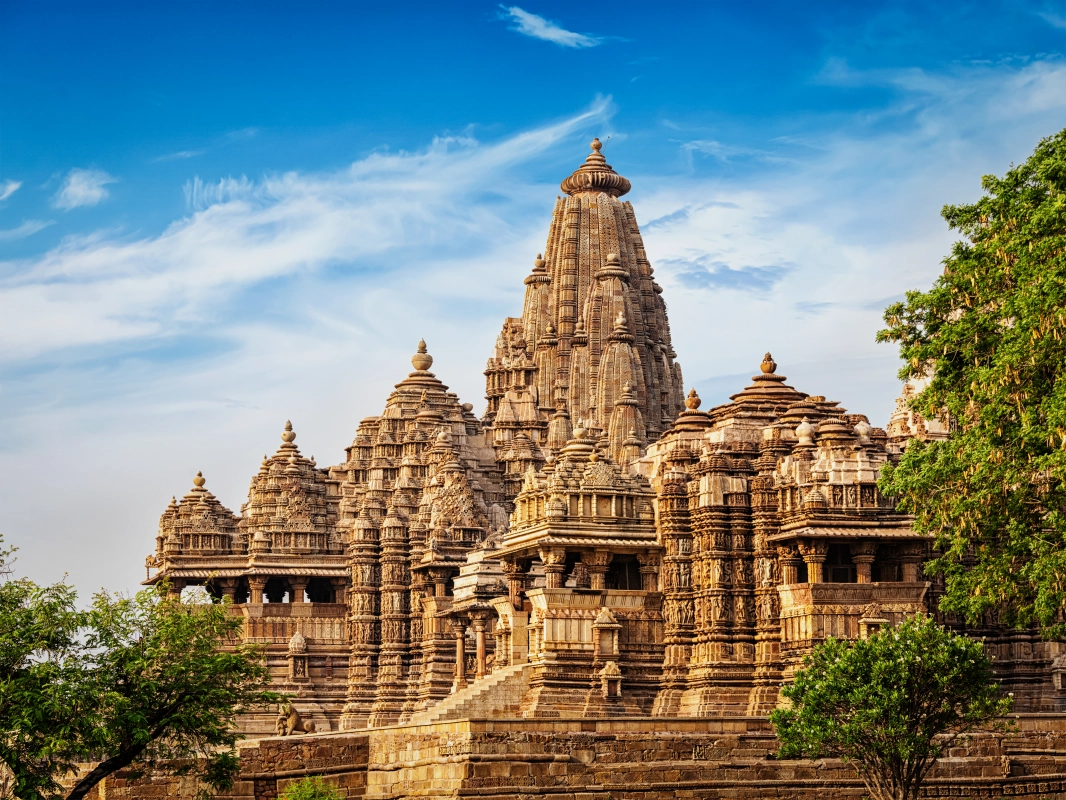
Kandariya Mahadeva Temple, Khajuraho
Khajuraho, Madhya Pradesh, India

 Nearby Airport: Khajuraho
 Nearby Railway Station: Khajuraho
 Nearby Bus Station:
Khajuraho
Nearby Bus Station:
Khajuraho
Description:
Introduction
Located in the Western Group of the Khajuraho monuments in Madhya Pradesh, the Kandariya Mahadev Temple is one of the finest masterpieces of medieval Indian temple architecture. Dedicated to Lord Shiva, it is the largest and most ornate temple in the Khajuraho complex, which is recognised as a UNESCO World Heritage Site.
The temple rises like a sacred mountain of stone, with clustered towers, richly carved walls, and a sanctum that houses a Shiva linga. For devotees and heritage lovers alike, Kandariya Mahadev is a place where Shaiva worship, Chandela artistry, and the symbolic language of Hindu temple architecture come together with extraordinary power.
Name and Sacred Meaning
The word Kandariya is often connected with kandara, meaning cave, and may be understood as the cave-like abode of Mahadev, Lord Shiva. The temple evokes the image of Mount Kailash or Mount Meru, the cosmic mountain at the centre of sacred Hindu imagination.
The main deity is Lord Shiva in linga form. The spiritual movement of the temple leads the devotee from the outer world of sculpted life and divine forms toward the dark, inward sanctum, symbolising the journey from worldly experience to inner stillness and union with Shiva.
History and Chandela Patronage
Kandariya Mahadev was built during the rule of the Chandela dynasty, most likely in the early eleventh century CE, when Khajuraho was flourishing as a major sacred and artistic centre. The temple is often associated with the reign of King Vidyadhara, a powerful Chandela ruler.
The Khajuraho temples were built between roughly the tenth and eleventh centuries, when the Chandelas developed a remarkable temple-building tradition in Bundelkhand. Over time, Khajuraho declined and the temples were covered by vegetation, but the site came back to wider attention in the nineteenth century. Today Kandariya Mahadev stands as the most celebrated monument of the surviving Khajuraho temple group.
Architecture
Kandariya Mahadev is a supreme example of the Nagara style of North Indian temple architecture. The temple is raised on a high platform and follows a carefully planned sequence of spaces: entrance porch, halls, vestibule, and the sanctum. Its soaring main shikhara is surrounded by many smaller urushringas, creating the visual effect of a mountain range rising toward the sky.
- Sanctum: The garbhagriha enshrines the Shiva linga, the sacred focus of worship.
- Shikhara: The tall curving tower above the sanctum is the dominant architectural feature.
- Mandapas: The pillared halls guide devotees inward while allowing light, shadow, and sculpture to shape the ritual experience.
- Platform: The elevated base allows circumambulation and gives the temple a majestic presence.
Sculptures and Symbolism
The outer walls of Kandariya Mahadev are covered with hundreds of finely carved figures. These include gods and goddesses, apsaras, musicians, guardians, mythical beings, couples, dancers, and scenes from everyday life. The carvings are not merely decorative; they present a sacred vision in which the human, natural, cosmic, and divine worlds are woven together.
Khajuraho is widely known for its erotic sculptures, but these form only a small part of the larger sculptural programme. Scholars often interpret them within the broader themes of auspiciousness, fertility, worldly life, and the spiritual movement from outer experience toward inner liberation. The craftsmanship of the sandstone figures shows the Chandela artists at the height of their skill.
Religious Significance
As a Shiva temple, Kandariya Mahadev is a kshetra of meditation, surrender, and inner transformation. The linga in the sanctum represents Shiva as the formless absolute, while the towering temple form represents the universe rising toward the divine. Devotees offer prayers for strength, wisdom, peace, and liberation.
The temple also reminds visitors that Indian sacred architecture is not only about worship but also about philosophy, art, music, dance, social life, and cosmic order. Every surface contributes to the larger experience of moving from the outer world to the sacred centre.
Festivals and Cultural Importance
Khajuraho is an important pilgrimage and cultural destination throughout the year. Maha Shivaratri is especially significant for Shiva devotees, while the Khajuraho Dance Festival celebrates India's classical dance traditions against the backdrop of the temple complex.
- Maha Shivaratri: Devotees worship Lord Shiva with special prayers, fasting, and offerings.
- Khajuraho Dance Festival: Classical dance performances bring the artistic spirit of the temples into a living cultural setting.
- Heritage Visits: The temple is an essential stop for students of Indian art, architecture, sculpture, and religious history.
How to Reach
Kandariya Mahadev Temple is located in Khajuraho, Chhatarpur district, Madhya Pradesh, within the Western Group of Monuments.
- By Air: Khajuraho Airport is the nearest airport and is located close to the temple town.
- By Train: Khajuraho Railway Station connects the town with major routes; Jhansi is another important railhead for onward travel.
- By Road: Khajuraho is connected by road with Chhatarpur, Jhansi, Satna, and other towns in Madhya Pradesh and Uttar Pradesh.
Visitor Information
- Best Time to Visit: October to March offers pleasant weather for exploring the temple complex.
- Entry: The monument complex is protected and maintained by heritage authorities; entry rules and ticketing may apply.
- Dress and Conduct: Modest clothing and respectful behaviour are recommended, as the monument is both sacred and historically important.
- Photography: Outdoor photography is generally popular, but visitors should follow site rules and posted instructions.
- Nearby Temples: Lakshmana Temple, Vishwanatha Temple, Jagadambi Temple, Chitragupta Temple, and the Jain temples of Khajuraho can be visited along with Kandariya Mahadev.