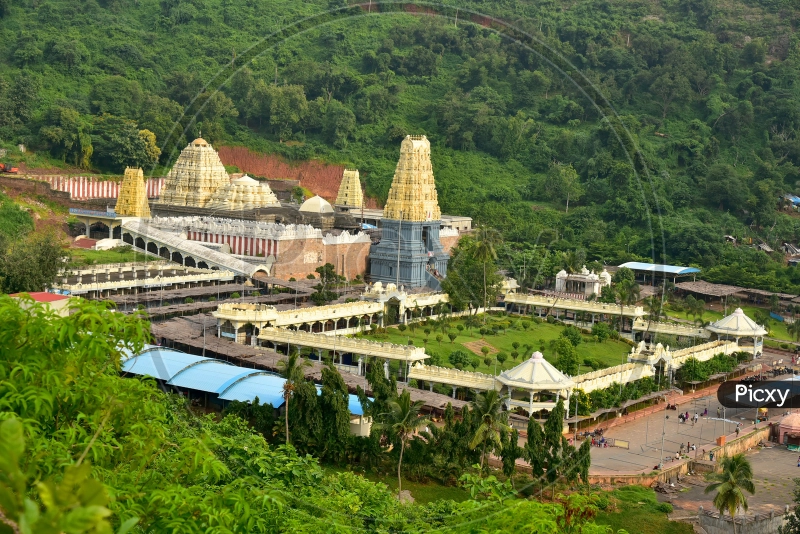
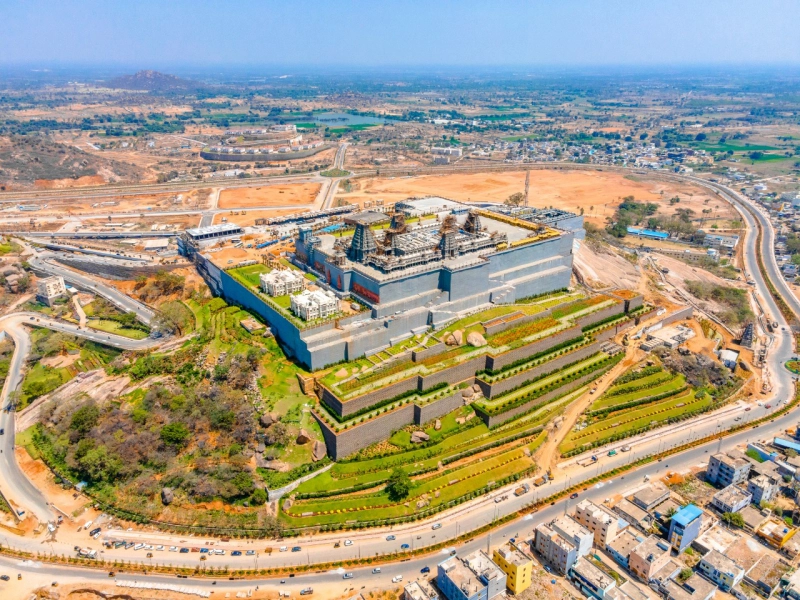
Narasimha Jayanti celebrates the appearance of Lord Narasimha, who emerged from a pillar at dusk to protect his young devotee Prahlada. Devotees fast and worship the Lord at sunset with panakam and vadapappu, and the great Narasimha kshetras of the Telugu lands – Yadadri, Simhachalam, Mangalagiri, Antarvedi and Kadiri – celebrate with special abhishekams.
Festival Dates
Introduction
Narasimha Jayanti – also called Nrusimha Jayanti or Narasimha Chaturdashi – celebrates the appearance of Lord Narasimha, the man-lion form of Lord Vishnu. It falls on Vaishakha Shukla Chaturdashi, the day before Vaishakha Pournami, usually in late April or May. Because the Lord appeared at dusk, the festival is kept on the day when Chaturdashi prevails at sunset, and the evening worship is its most important moment. The Telugu lands are rich in Narasimha kshetras, and the festival is celebrated with great devotion at temples such as Yadadri, Simhachalam, Mangalagiri, Antarvedi and Kadiri.
Significance and Legend
According to tradition, the demon king Hiranyakashipu won a boon that he could be killed neither by man nor by beast, neither by day nor by night, neither indoors nor outdoors, neither on the earth nor in the sky, and by no weapon. Proud of this boon, he declared himself god – yet his young son Prahlada remained a steadfast devotee of Lord Narayana, and could not be harmed by all his father's cruelty. When Hiranyakashipu mockingly asked whether Narayana was present in a pillar of the palace and struck it, the Lord burst forth from the pillar as Narasimha – neither man nor beast – at dusk, neither day nor night. Seated on the threshold, neither inside nor outside, he placed the demon on his lap, neither on the earth nor in the sky, and destroyed him with his claws. Then, calmed by Prahlada's prayers, the Lord blessed his devotee. The festival celebrates the Lord who protects those who take refuge in him, and the triumph of faith over arrogance.
How it is Celebrated in Andhra Pradesh and Telangana
- Fasting: many devotees fast through the day and break the fast after the evening puja.
- Worship at dusk: the main worship is offered at sunset (sandhya), the hour of the Lord's appearance, often with the reading of the Prahlada story.
- Temple festivals: the Narasimha kshetras hold special abhishekams, homams and processions – at Yadadri the Jayanti is celebrated over three days.
- Panakam and vadapappu: homes and temples offer the cool jaggery drink panakam and soaked moong dal (vadapappu) – fitting offerings in the summer heat, and especially dear to the Lord, who at Mangalagiri is worshipped as Panakala Narasimha.
Rituals and Puja
- An early bath and a vow (sankalpam) to keep the fast.
- Evening worship of Lakshmi Narasimha with flowers, tulasi and lamps.
- Recitation of Narasimha stotras such as the Lakshmi Narasimha Karavalamba Stotram and the Lord's names.
- Charity in the Lord's name – giving water, buttermilk and panakam to people in the summer heat is considered especially meritorious.
Foods and Offerings
- Panakam – water with jaggery, pepper and cardamom.
- Vadapappu – soaked split moong dal.
- Fruits, tulasi and flowers for the Lord.
Temples Known for this Festival
- Yadadri Sri Lakshmi Narasimha Swamy Devasthanam – three-day Jayanti celebrations, with rithviks chanting the moola mantra and the Ashtottara Shata Ghatabhishekam for the Lord.
- Sri Varaha Lakshmi Narasimha Swamy Vari Devasthanam, Simhachalam – Narasimha Jayanti is one of the annual festivals of the Lord of Simhachalam.
- Sri Panakala Lakshmi Narasimha Swamy Temple, Mangalagiri – among the temple's major festivals, celebrated with special pujas for the Lord who accepts panakam.
- Sri Lakshmi Narasimha Swamy Temple, Antarvedi – celebrated on Vaishakha Shuddha Chaturdashi at this Narasimha kshetra where the Godavari meets the sea.
- Sri Khadri Lakshmi Narasimha Swamy Temple, Kadiri – the Lord's appearance day, with special abhishekams.
The Narasimha Jayanti date is shown in the festival dates above. It falls on Vaishakha Shukla Chaturdashi, observed on the day when Chaturdashi prevails at sunset, as per the Telugu panchang.
Temples Celebrating Narasimha Jayanti (Nrusimha Jayanti)