Sri Trikoteswara Swamy Temple
Kotappakonda Sri Trikoteswara Swamy Temple
Kotappakonda , Andhra Pradesh, India

 Nearby Airport: Gannavaram
 Nearby Railway Station: Narsaraopet
 Nearby Bus Station:
Narsaraopet
Nearby Bus Station:
Narsaraopet
Description:
Sri Trikoteswara Swamy Temple, Kotappakonda
Sri Trikoteswara Swamy Temple at Kotappakonda is one of Andhra Pradesh's celebrated Shaiva kshetras. The temple stands on the sacred Trikutadri, also called Trikuta Parvatham, near Narasaraopet in Palnadu district. The hill is famous because it appears as three distinct peaks from every direction, and Lord Shiva is worshipped here as Trikoteswara, the Lord of the Three Peaks.
Trikutadri and the Three Peaks
Kotappakonda is traditionally associated with Brahma Shikharam, Vishnu Shikharam and Rudra Shikharam. The present main temple of Sri Trikoteswara Swamy is on Brahma Shikharam. Rudra Shikharam is connected with the older Koteswara shrine, often remembered as Paatha Kotayya, while Vishnu Shikharam is associated with Paapanaseswara worship and the idea of purification. Together, these three peaks give the hill its name and its distinctive spiritual identity.
Sacred Form of Lord Shiva
The sthala purana remembers Lord Shiva here in the peaceful form of Dakshinamurthy after the destruction of Daksha Yagna. In this tradition, the Lord appears as a youthful brahmachari and teacher, granting spiritual instruction to Brahma, Vishnu, devas and sages. Because of this Dakshinamurthy association, the temple is deeply connected with knowledge, discipline, silence, penance and inner clarity. Local tradition also notes that marriages are not conducted at this shrine.
History and Patronage
Temple tradition and inscriptions indicate that Kotappakonda was known before 1172 CE. References connect the shrine with inscriptions from the Velanati Chola period and later patronage from rulers, zamindars and devotees. Sri Krishnadevaraya and zamindars from Narasaraopet, Chilakaluripet, Amaravathi and nearby regions are remembered for gifts and support to the temple. Over time, roads, steps, mandapams, ghats and pilgrim facilities helped the hill temple grow into a major regional pilgrimage centre.
Anandavalli or Gollabhama Legend
The most beloved local legend is the story of Anandavalli, also called Gollabhama. Born to the cattleman Sundudu and his wife Kundiri near the Trikuta hills, Anandavalli became an intense devotee of Lord Shiva. She worshipped at the old shrine on Rudra Shikharam with extraordinary dedication. Pleased with her devotion, Lord Shiva appeared as Jangama Devara and tested her faith. Later, he promised to follow her home but warned her not to look back.
When Anandavalli reached Brahma Shikharam, she turned around, and the Lord halted there, entered the hill cave and manifested as a lingam. This sacred manifestation became the present Sri Trikoteswara Swamy Temple. The story is remembered as a lesson in surrender, patience and the mysterious grace of Shiva.
Architecture and Temple Experience
The temple is approached by steps and by ghat road. The hill route includes views of the countryside, mandapams, small shrines and resting points. The temple area includes the main Shiva sanctum, gopuram, spaces for worship and panoramic views from the hill. Devotees often chant "Hara Hara Kotayya" while climbing or waiting for darshan, giving the shrine a strong local devotional character.
Sevas and Worship
Regular worship includes archana, ashtottaram, panchaharathi, abhishekam, annaprasana, aksharabhyasam, vehicle pujas and hair offering. Special schemes such as Saswatha Abhishekam, Saswatha Ashtottaram, Nitya Gotranam, Karthika Masa Paroksha Abhishekam and Maha Shivaratri Paroksha Abhishekam are also associated with the temple. Karthika Masam, Mondays, Amavasya and auspicious Shaiva days bring many devotees.
Maha Shivaratri and Prabhas
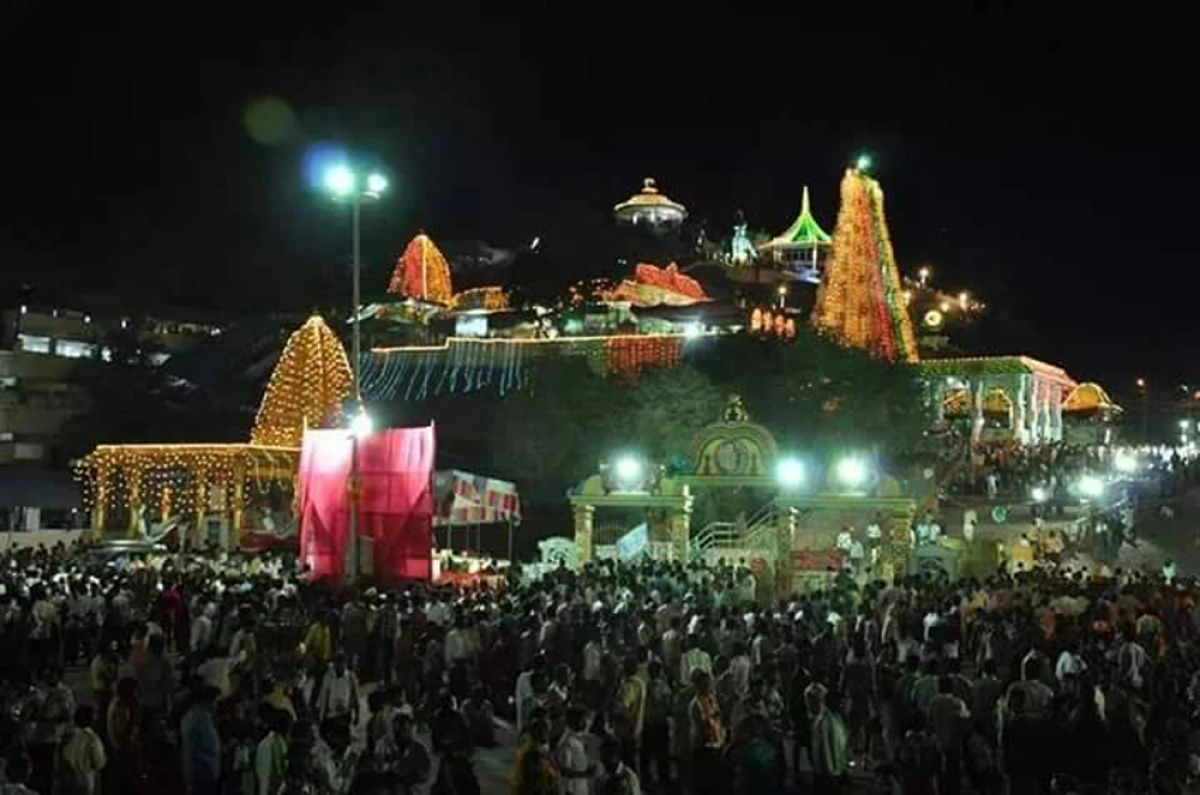
Maha Shivaratri is the grandest festival at Kotappakonda. The annual jatara draws huge crowds from Andhra Pradesh and Telangana. A unique feature of this festival is the Prabha tradition, where village communities bring tall decorated light towers with devotion and pride. Music, processions, offerings, Lingodbhava abhishekam and the festive cry of "Kotayya" fill the hill and its surrounding villages with intense Shaiva energy.
How to Reach
Kotappakonda is near Narasaraopet in Palnadu district. It is about 15 km from Narasaraopet, about 21 km from Chilakaluripet and around 45 km from Vinukonda via Petlurivaripalem. Narasaraopet is the nearest railway station and regular road transport is available from nearby towns. The nearest major airport is Vijayawada Airport at Gannavaram. During Maha Shivaratri, special buses and traffic arrangements are usually made for pilgrims.
Visitor Notes
Regular temple timings are generally morning to early afternoon and again in the evening, but festival schedules can change. Devotees should check current Devasthanam information before travel, especially for sevas, accommodation and Maha Shivaratri arrangements. The hill is best visited with comfortable footwear for the approach, water, patience in queues and respect for the sacred hill environment.