Heritage · Faith · Tradition
About the Temple
Introduction
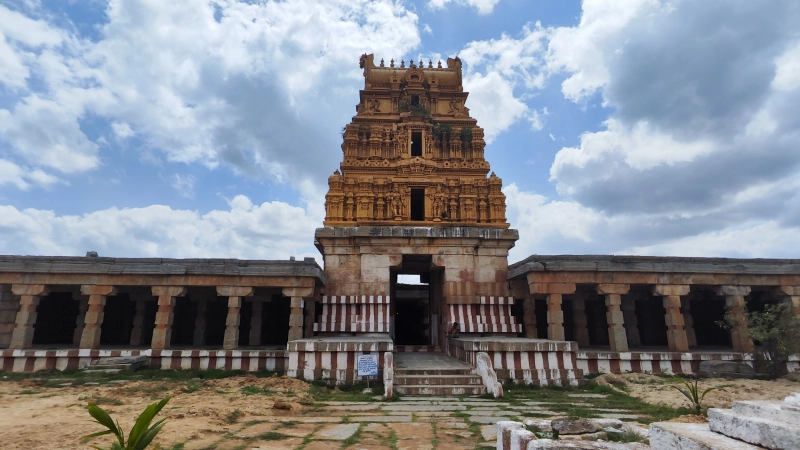
The Ramappa Temple – formally the Sri Rudreswara Swamy Temple – at Palampet in Mulugu district, Telangana, is the crowning masterpiece of Kakatiya art and architecture. In 2021 it was inscribed as a UNESCO World Heritage Site, as the Kakatiya Rudreshwara (Ramappa) Temple. It stands in a peaceful rural setting beside the great Ramappa lake, and is both a living Shiva temple and one of India's finest medieval monuments.
Main Deity
The presiding deity is Lord Shiva worshipped as Sri Rudreswara, in the form of a Shiva Lingam. In front of the sanctum sits a beautifully carved, polished Nandi, one of the finest of the Kakatiya period. Smaller shrines within the complex include those of Kameswara and Kateswara.
History
The temple was built in 1213 CE by Recharla Rudra, a general of the Kakatiya king Ganapati Deva, as recorded in the temple's inscription. It is famous as one of the very few temples in India named after its sculptor rather than its deity: it is popularly called after Ramappa, the master craftsman believed to have led its construction. The temple has survived for more than eight centuries, including wars and earthquakes, a testament to the skill of its builders.
Kakatiya Architecture
Ramappa shows the Kakatiya style at its peak – a style that grew out of the traditions of the Kalyani Chalukyas and developed its own distinctive character in the Telugu lands:
- Star-shaped platform: the temple stands on a high, star-shaped base, with a pillared hall and the sanctum crowned by a tower.
- Black basalt sculpture: the pillars and brackets are carved from hard black stone and polished to a mirror-like shine, with remarkably fine detail.
- Madanikas and Nagini: the bracket figures of graceful dancers, musicians and serpent-maidens are among the most admired sculptures in India.
- Dance in stone: the carvings record poses of classical dance, and they helped inspire the revival of the Perini Shivatandavam, a vigorous warrior dance of the Kakatiya era.
- Light bricks: the tower is built of unusually light, porous bricks – often said to float on water – which reduced the load on the structure.
- Sandbox foundation: the temple stands on a foundation filled with sand, a technique credited with helping it withstand earthquakes.
Ramappa Lake
Close to the temple lies the Ramappa lake, a large reservoir built in the Kakatiya period that still irrigates the surrounding fields. Its calm waters and green surroundings make the temple setting especially beautiful.
Festivals
- Maha Shivaratri (February–March): the main festival, with special worship of Sri Rudreswara and large gatherings of devotees.
- Karthika Masam (October–November): lamps are lit and special pujas are offered, especially on Mondays.
Temple Timings
- The temple is generally open from morning until evening.
- Please check locally for timings on festival days.
How to Reach
By Road: Palampet is about 65 km from Warangal and about 15 km from Mulugu. TGSRTC buses and taxis are available from Warangal, Hanamkonda and Mulugu.
By Train: the nearest major railway stations are Warangal and Kazipet, about 65 km away.
By Air: the nearest airport is Rajiv Gandhi International Airport, Shamshabad (HYD), about 210 km away.
Visitor Information
- Dress code: modest clothing is recommended.
- Heritage visit: take time to study the bracket figures and pillars; a guide helps explain the details and the history.
- Best time to visit: October to February, when the weather is pleasant.
- Kakatiya heritage circuit: combine your visit with the Warangal Fort and its Kakatiya Kala Thoranam gateways, and the Thousand Pillar Temple (Sri Rudreswara Swamy Temple), Hanamkonda.