
Heritage · Faith · Tradition
About the Temple
Introduction
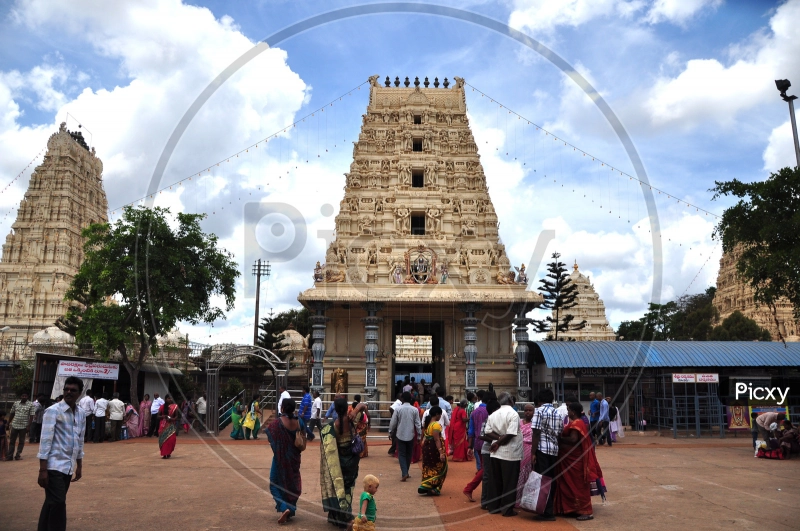
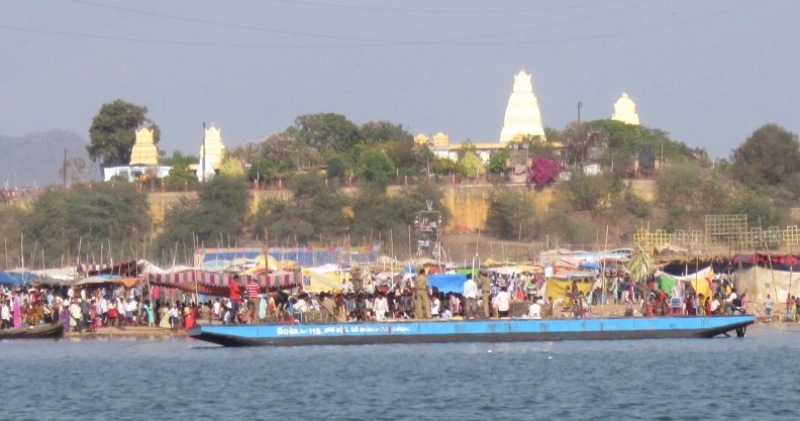
Sri Veerabhadra Swamy Temple at Pattiseema is one of the most unusual and beautiful temples in Andhra Pradesh. It stands on Devakuta hill, a small rocky island in the middle of the mighty Godavari river, near Pattiseema village in Polavaram mandal, Eluru district (formerly West Godavari). Pilgrims reach the temple by boat, and the journey across the wide river, with the Eastern Ghats rising in the distance, is an unforgettable part of the visit.
Main Deity and Worship
The presiding deity is Sri Veerabhadra Swamy, the fierce warrior form of Lord Shiva, worshipped together with Goddess Bhadrakali. Devotees pray to Veerabhadra for courage, protection from harm and victory over obstacles. Daily abhishekam and archanas are offered to the Lord.
Sthala Puranam (Legend)
The story of Veerabhadra begins with the yagna of Daksha Prajapati. Daksha held a great sacrifice but deliberately did not invite Lord Shiva, his son-in-law. When Goddess Sati, Daksha's daughter and Shiva's consort, went to the yagna and was insulted there, she gave up her life in the sacred fire. In His grief and anger, Lord Shiva created Veerabhadra from a lock of His matted hair. Veerabhadra destroyed Daksha's yagna and punished its proud host.
According to local belief, after this great battle Veerabhadra came to rest on this hill in the Godavari, and the place takes its name from pattisam, the weapon He carried. The river flowing around the hill on all sides is regarded as especially sacred here, and a bath in the Godavari before darshan is considered very meritorious.
Mahima / Significance
Pattiseema is counted among the important Shaiva kshetrams of the Godavari region. Its setting – a temple on an island hill in the middle of a great river – gives it a rare, peaceful atmosphere that draws both pilgrims and nature lovers. Families from the Godavari districts traditionally visit to fulfil vows to Veerabhadra Swamy, especially during Maha Shivaratri.
Temple Complex
Steps lead up from the boat landing to the shrine at the top of Devakuta hill. From the hilltop, visitors enjoy wide views of the Godavari in every direction, with sandbanks, fishing boats and the hills of the Papikondalu range upstream. The temple is simple and traditional in style, and its natural surroundings are a large part of its charm.
Temple Timings
- The temple is generally open from morning to evening. Because the shrine can only be reached by boat, plan to visit during daylight hours.
- Boat services depend on the river level and the weather, and may be suspended during heavy floods in the monsoon. Please check locally before your visit.
Festivals
- Maha Shivaratri (February–March): the grandest festival of the year. A large jatara is held, and lakhs of devotees cross the river by boat to have darshan of the Lord, with special boat and safety arrangements made by the authorities.
- Karthika Masam (October–November): devotees take holy dips in the Godavari, light lamps and offer special pujas, especially on Mondays and on Karthika Pournami.
How to Reach
By Road: Pattiseema village is about 40 km from Rajahmundry and about 30 km from Kovvur, on the western bank of the Godavari. APSRTC buses and private vehicles run to Pattiseema from Kovvur, Rajahmundry and Polavaram.
By Boat: From the ghat at Pattiseema village, boats carry pilgrims across the river to Devakuta hill in a few minutes.
By Train: The nearest railway stations are Kovvur (about 30 km) and Rajahmundry (about 40 km), which has many more train services.
By Air: The nearest airport is Rajahmundry Airport (RJA), about 55 km away by road.
Visitor Information
- Dress code: traditional attire is recommended.
- Safety: always use authorised boats, wear life jackets where provided, and take extra care with children near the water.
- Best time to visit: October to March, when the river is calm and the weather is pleasant. Avoid the peak monsoon, when the Godavari is in flood.
- Crowds: Maha Shivaratri and the Mondays of Karthika Masam are very busy.
- Stay: basic facilities are available at Pattiseema; Rajahmundry has a wide range of hotels.
- Nearby places: the Pattiseema lift irrigation scheme, the Polavaram project area, Papikondalu boat cruises on the Godavari, and the many temples and ghats of Rajahmundry.
- Another Veerabhadra kshetra: the Sri Veerabhadra Swamy Temple, Lepakshi, a Vijayanagara masterpiece famed for its hanging pillar and giant monolithic Nandi.